
Lodaer Img

Early Signs of Kidney Disease You Should Never Ignore

Early Signs of Kidney Disease

Early Signs of Kidney Disease You Should Never Ignore

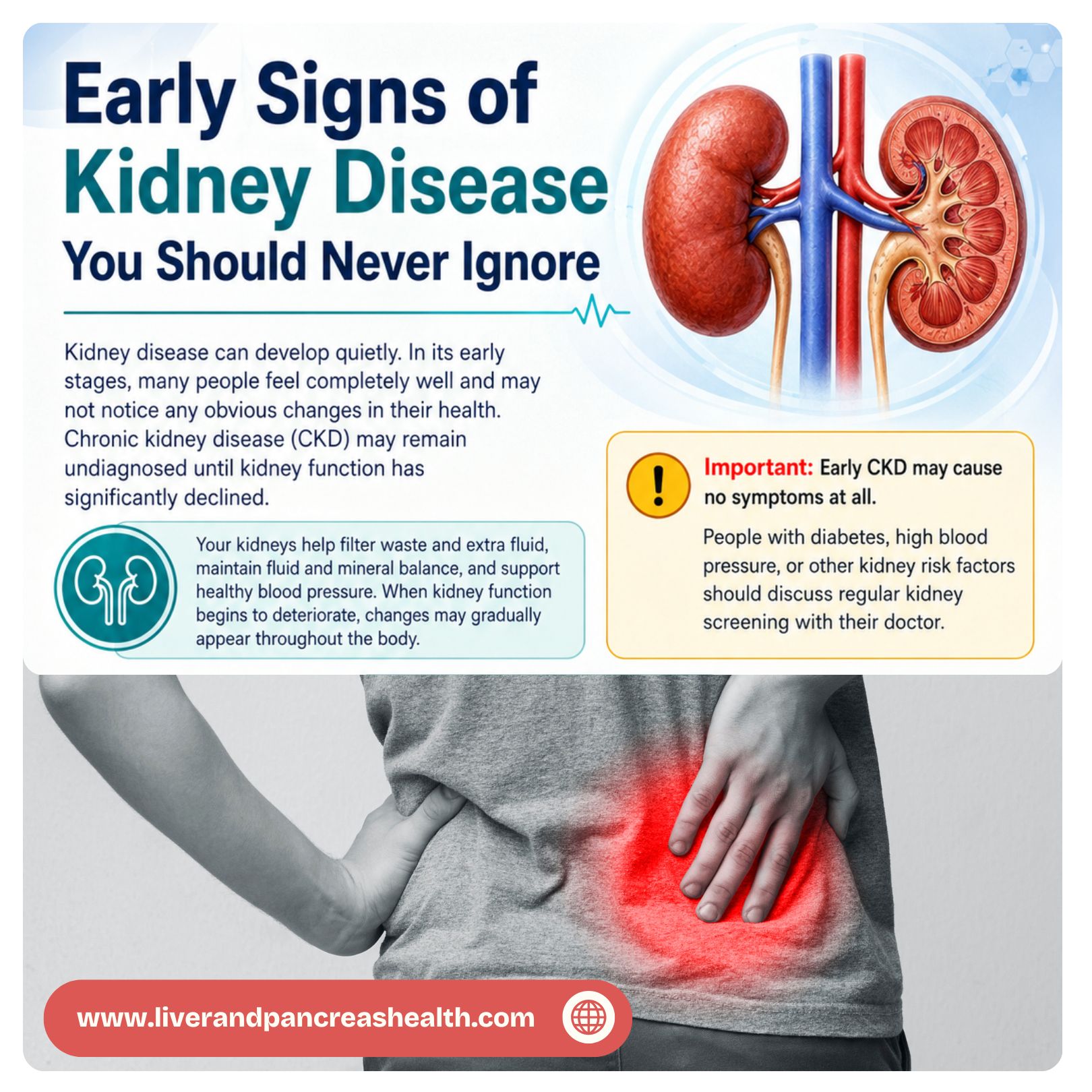
Kidney disease can develop quietly. In its early stages, many people feel completely well and may not notice any obvious changes in their health. This is one of the reasons chronic kidney disease (CKD) can remain undiagnosed until kidney function has significantly declined.

Your kidneys perform several essential functions, including filtering waste products and excess fluid from the blood, maintaining fluid and mineral balance, and supporting healthy blood pressure. When kidney function begins to deteriorate, changes may gradually appear throughout the body.

Recognizing possible warning signs, understanding your risk factors, and undergoing appropriate kidney function testing can help identify kidney disease earlier and allow timely medical management.

Why Is Early Kidney Disease Difficult to Detect?

One of the most important things to understand about chronic kidney disease is that early CKD may cause no symptoms at all.

A person can have declining kidney function or abnormal levels of protein in the urine while still feeling healthy. Symptoms are generally more likely to develop as kidney function becomes more significantly impaired or complications occur.

For this reason, people with risk factors such as diabetes or high blood pressure should discuss regular kidney screening with their doctor rather than waiting for symptoms to appear.

1. Changes in Urination

Changes in your normal urination pattern may sometimes indicate a kidney or urinary system problem.

You may notice:

  • Urinating more frequently than usual
  • Urinating more often during the night
  • Passing less urine than usual
  • Changes in the appearance of urine
  • Difficulty or discomfort while urinating

Not every urinary change means that you have kidney disease. Urinary tract infections, prostate conditions, medications, fluid intake and several other conditions can also affect urination.

Persistent or unexplained changes should therefore be medically evaluated.

2. Foamy or Bubbly Urine

Occasional bubbles in urine are usually not a cause for concern. However, urine that repeatedly appears unusually foamy may sometimes be associated with increased protein in the urine.

Healthy kidneys normally prevent significant amounts of albumin, a protein found in blood, from passing into the urine. Kidney damage can allow albumin to leak through the kidney’s filtering system, resulting in albuminuria.

A urine albumin-to-creatinine ratio, commonly known as UACR, can be used to check for abnormal albumin levels.

3. Blood in the Urine

Visible blood in the urine should never simply be ignored.

Blood in the urine can occur for many reasons, including:

  • Kidney stones
  • Urinary infections
  • Kidney disorders
  • Prostate conditions
  • Urinary tract abnormalities
  • Other urological conditions

Blood in the urine does not automatically mean kidney failure, but it warrants proper medical assessment to identify the underlying cause.

4. Swelling Around the Ankles, Feet or Legs

Healthy kidneys help remove excess salt and fluid from the body.

When kidney function becomes impaired, excess fluid may accumulate and contribute to swelling, or edema, particularly around the feet, ankles and legs. In some cases, swelling may also affect other areas of the body.

Swelling can also be caused by heart disease, liver disease, medications, circulation problems and several other conditions, so the underlying cause must be professionally evaluated.

5. Persistent Fatigue or Weakness

Feeling unusually tired despite adequate rest may occur for many reasons.

With significant reduction in kidney function, waste products can accumulate in the blood and patients may experience fatigue or weakness. Kidney disease can also be associated with complications such as anemia, which may contribute to low energy levels.

Persistent unexplained fatigue deserves medical evaluation, particularly when accompanied by other symptoms or kidney disease risk factors.

6. Puffy Eyes

Persistent puffiness around the eyes may have several causes, including allergies, sleep problems and other medical conditions.

In some patients, kidney-related protein loss in the urine can be associated with fluid retention. If persistent puffiness occurs together with swelling elsewhere in the body or abnormal urine findings, kidney assessment may be appropriate.

7. Dry or Itchy Skin

Persistent dry or itchy skin can occur for many reasons and is not usually an early symptom on its own.

However, people with more advanced chronic kidney disease can experience itching or dry skin as kidney function and mineral balance become increasingly affected.

If persistent itching is accompanied by swelling, fatigue, appetite changes or known kidney disease, speak with your healthcare provider.

8. Loss of Appetite or Nausea

Reduced appetite, nausea or an unpleasant taste can occur when kidney disease becomes more advanced.

These symptoms are nonspecific and are frequently caused by gastrointestinal disorders, medications, infections and many other conditions. However, when they occur together with abnormal kidney function or other kidney-related symptoms, further evaluation may be necessary.

9. Difficulty Concentrating

When kidney function declines substantially, the accumulation of waste products and complications such as anemia can contribute to difficulty concentrating, reduced energy and a general feeling of being unwell.

Because difficulty concentrating has many possible causes, kidney function testing may form part of a broader medical assessment when clinically appropriate.

10. Shortness of Breath

Shortness of breath can be associated with many heart, lung and medical conditions and requires appropriate assessment.

In people with advanced kidney dysfunction, fluid retention and anemia can sometimes contribute to breathing difficulty.

New, severe or rapidly worsening shortness of breath should receive prompt medical attention.

Consult Dr. Rakesh Rai โ€“ Kidney & Transplant Surgeon in Dubai

Dr. Rakesh Rai is an experienced HPB (Hepato-Pancreato-Biliary) and Transplant Surgeon based at King’s College Hospital in Dubai, with expertise in:

  • Kidney transplantation
  • Liver transplantation
  • Pancreas transplantation
  • Hepatobiliary surgery
  • Pancreatic surgery

With 20+ years of experience, Dr. Rakesh Rai provides specialist surgical evaluation and care for patients requiring complex HPB and transplant procedures.

Book a Consultation

๐Ÿ“ฑ WhatsApp: +971 52 131 1071
๐Ÿ‘จโ€โš•๏ธ Dr. Rakesh Rai
HPB & Transplant Surgeon โ€“ Liver, Kidney and Pancreas
King’s College Hospital, Dubai

Leave a Reply

Your email address will not be published. Required fields are marked *