
Kidney Failure Treatment Options: Dialysis vs Kidney Transplant
Kidney failure occurs when the kidneys can no longer adequately filter waste products, remove excess fluid, and maintain the body’s normal chemical balance. When kidney function becomes severely reduced, patients may require kidney replacement therapy.
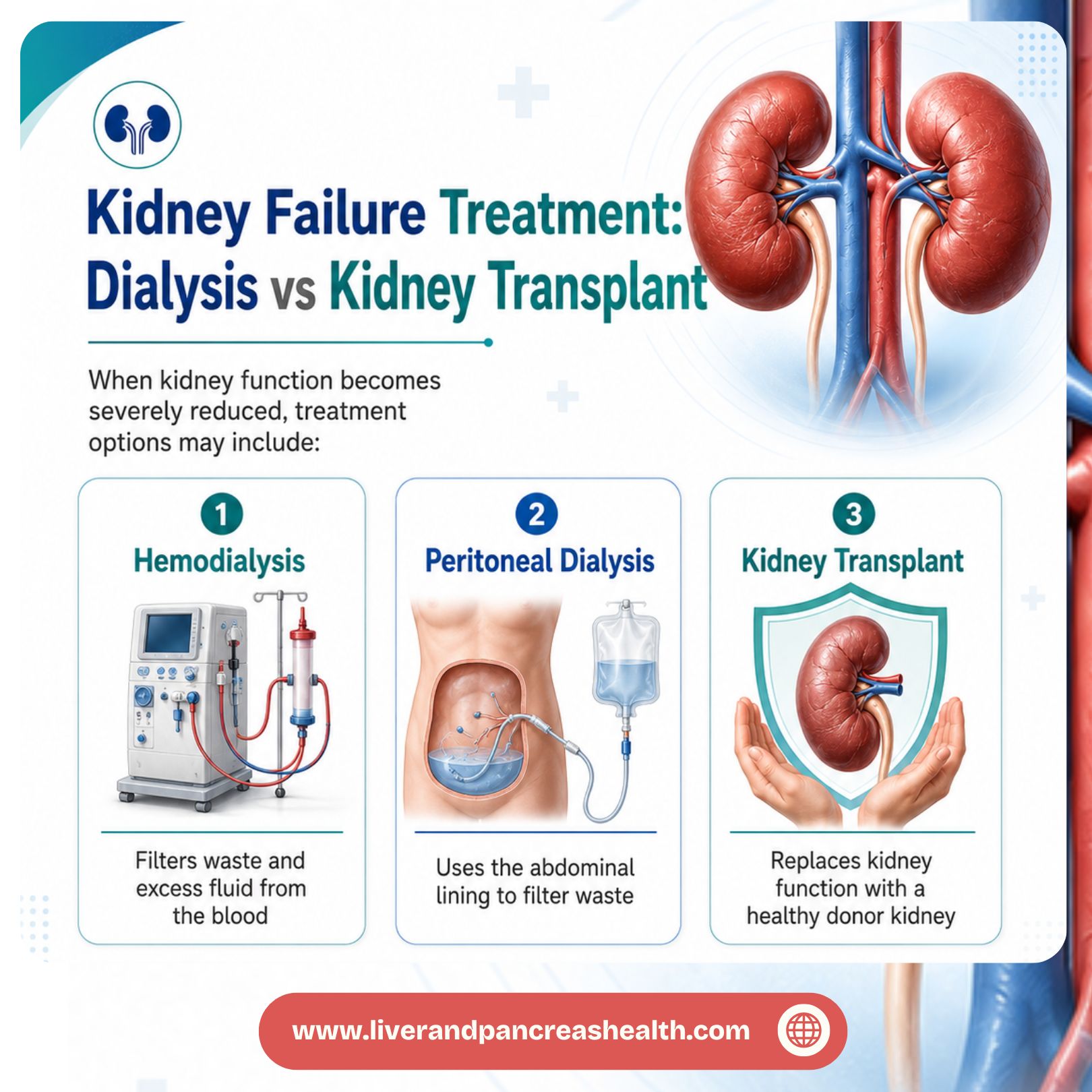
The main treatment options include hemodialysis, peritoneal dialysis, and kidney transplantation. The most suitable treatment depends on a patient’s overall health, kidney condition, lifestyle, transplant eligibility, and personal preferences.
What Is Dialysis?
Dialysis performs some of the functions normally carried out by healthy kidneys. It helps remove waste products and excess fluid from the blood.
There are two main types of dialysis:
Hemodialysis
Hemodialysis uses a dialysis machine and filter to clean the blood. Treatment may be performed at a dialysis centre or, for selected patients, at home.
Peritoneal Dialysis
Peritoneal dialysis uses the lining of the abdomen, called the peritoneum, as a natural filter. A special dialysis fluid is placed inside the abdomen through a catheter to help remove waste and excess fluid.
What Is a Kidney Transplant?
A kidney transplant is a surgical procedure in which a healthy kidney from a living or deceased donor is placed into a patient with kidney failure.
For medically suitable patients, kidney transplantation may provide greater freedom from regular dialysis and can improve quality of life. However, transplantation requires careful medical evaluation, a suitable donor kidney, surgery, and lifelong anti-rejection medication.
Dialysis vs Kidney Transplant
| Dialysis | Kidney Transplant |
| Filters waste and excess fluid from the blood | Replaces kidney function with a healthy donor kidney |
| Requires regular ongoing treatment | Requires transplant surgery |
| Does not require an organ donor | Requires a suitable donor kidney |
| Dietary and fluid restrictions may be needed | Restrictions may be reduced after successful recovery |
| Can be started when medically required | Requires transplant eligibility and evaluation |
| No anti-rejection medication is required | Lifelong anti-rejection medication is generally required |
Which Treatment Is Better?
There is no single treatment that is suitable for every patient.
For eligible patients, a successful kidney transplant may offer advantages compared with remaining on long-term dialysis, including greater independence and fewer dialysis-related restrictions.
However, some patients may not be suitable candidates for transplantation because of their overall medical condition or other factors. Dialysis remains an important and life-sustaining treatment for people with kidney failure.
Who Can Be Considered for a Kidney Transplant?
Kidney transplant eligibility is determined through a detailed medical assessment. Doctors may consider factors such as:
- Overall health and fitness for surgery
- Heart and blood vessel health
- Presence of infections
- Other medical conditions
- Ability to take long-term medications
- Availability of a suitable living or deceased donor kidney
Living Donor and Deceased Donor Kidney Transplant
A kidney for transplantation may come from a living donor, such as a relative or another medically suitable donor, or from a deceased donor.
Living donor transplantation may allow surgery to be planned in advance and can sometimes reduce the waiting period for transplantation.
Life After Kidney Transplant
Following a successful transplant, patients usually need regular follow-up appointments and blood tests.
They must also take immunosuppressive medicines to reduce the risk of the immune system rejecting the transplanted kidney.
Maintaining a healthy lifestyle, taking medicines exactly as prescribed, and attending regular medical follow-ups are important for protecting the transplanted kidney.
Choosing the Right Kidney Failure Treatment
Choosing between dialysis and kidney transplantation requires careful discussion with a nephrologist and transplant team.
Treatment decisions should consider:
- Stage and cause of kidney disease
- Overall health
- Age and associated medical conditions
- Lifestyle requirements
- Transplant eligibility
- Donor availability
- Individual preferences
With 20+ years of experience, Dr. Rakesh Rai provides specialist surgical and transplant evaluation for patients requiring complex HPB and organ transplant care.
Book a Consultation
📱 WhatsApp: +971 52 131 1071
👨⚕️ Dr. Rakesh Rai
HPB & Transplant Surgeon – Liver, Kidney & Pancreas
King’s College Hospital, Dubai