
The Pancreas: Function, Location and Importance
The pancreas is an important organ that plays a vital role in both digestion and blood sugar regulation. It produces digestive enzymes that help break down food and hormones that help maintain healthy blood glucose levels.
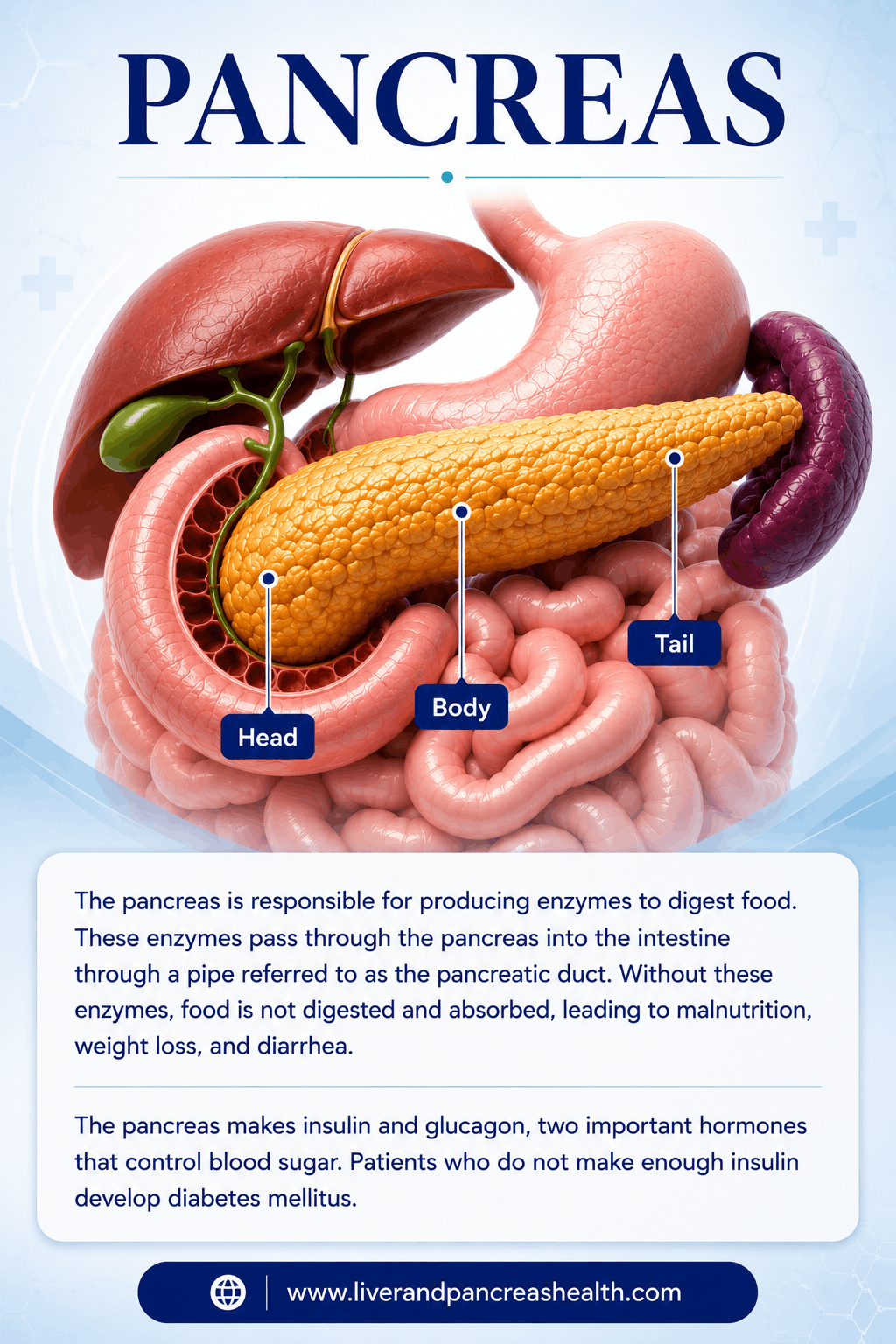
The pancreas is located deep in the abdomen, beneath and behind the stomach, in an area known as the retroperitoneum. It is surrounded by key organs including the stomach, small intestine, liver, and spleen. Structurally, the pancreas has a shape similar to a fish and is divided into three main parts: the head, body, and tail.
Role of the Pancreas in Digestion
One of the main functions of the pancreas is to produce enzymes that support the digestion of food. These enzymes travel through the pancreatic duct into the small intestine, where they help break down fats, proteins, and carbohydrates.
When the pancreas does not produce enough digestive enzymes, the body may not be able to digest and absorb nutrients properly. This can lead to symptoms such as weight loss, malnutrition, and diarrhea.
Role of the Pancreas in Blood Sugar Control
The pancreas also produces important hormones, including insulin and glucagon, which help regulate blood sugar levels. Insulin helps the body use glucose for energy, while glucagon helps maintain blood sugar levels when they become too low.
Problems with insulin production or function can lead to diabetes mellitus, a condition that requires proper medical evaluation and long-term management.
About Dr. Rakesh Rai
Dr. Rakesh Rai is a highly experienced HPB, hepato-pancreato-biliary, and transplant surgeon specializing in liver, kidney, and pancreas surgery. He is based at King’s College Hospital Dubai and has extensive international training and clinical experience in some of the world’s leading medical centres.